
Compare Hartford County Property Value Types
Connecticut municipalities assess property at 70% of fair market value under the standard framework. That ratio does not make the figures interchangeable. Read each value type, effective date, and source before comparing.
| Value | What It Is | Where |
|---|---|---|
| Assessed value | The grand-list amount, generally 70% of applicable fair-market value | Municipal assessor |
| Market or appraised value | The assessor's estimate as of the revaluation date | Municipal property card |
| Last sale price | Reported consideration, subject to deed and sale-code qualifications | Deed and assessor sale fields |
| Taxable value | Assessed value after applicable exemptions or statutory treatment | Assessment record |
A recorded price may come from a family transfer, an entity change, a foreclosure, or a partial interest. None of those proves an open-market deal, and an assessed value can lag behind an earlier revaluation date.
Hartford County Assessed Value Is Municipal
No county assessor exists here. Hartford, New Britain, West Hartford, and the remaining municipalities each build their own grand list. Confirm the municipality in GIS rather than trusting a ZIP label alone. New Britain and West Hartford both state the 70% standard. Hartford's Assessor page names October 1 as its assessment date. Keep that date beside any property value. Market movement and assessment snapshots rarely stay in step.
Read Hartford CAMA Value and Sale Fields
Hartford's CAMA schema carries `TotApprsdValue`. Physical fields cover acreage, finished area, year built, bedrooms, heating, roof, foundation, and building type. The sale side includes `LastSaleDate`, `LastSalePrice`, `LastSalecode`, `LastSaleType`, `LastGrantor`, and `LegalRef`. Sale codes do real work. They test whether a price compares fairly. Treat the CAMA REST table as a database service, not a certified card or appraisal. Note: Preserve the field label and record date. A number stripped of its source and valuation date can mislead.
Revaluation Dates Shape Hartford County Property Value
Hartford states that its October 1, 2021 revaluation is in effect, with the next one scheduled for October 1, 2026. West Hartford names the same 2021 revaluation, a prior 2016 cycle, and the next October 1, 2026 date. Revaluation resets the assessor's frame of reference. It promises no sale result. Hartford also published a 2024 Grand List total of $4,741,807,174, along with assessment material and a 2021 sales book. Citywide totals give context only. For one assessed value, the card is the source.
Look Up a Hartford County Property Value
Work through the municipality's own assessor system, and capture enough context to reproduce the result later. Hartford publishes detailed CAMA fields. New Britain links VGSI, and West Hartford supplies property cards and sale books.
- Confirm the municipality and search its assessor portal by situs or parcel identifier.
- Record the market or appraised value, assessed value, components, and effective date.
- Read the last-sale fields and follow the legal reference to the deed when a comparison matters.
- Save the portal URL and check date, then explain different valuation or transfer dates.
- Assessed value
- The grand-list amount under the municipal framework.
- Market value
- The assessor's estimate as of a stated revaluation date.
- Assessment ratio
- The relationship between assessed and fair-market value.
- Sale consideration
- The reported transfer amount, whose deed type affects its meaning.
Recorded Sale Price Needs Hartford County Context
A last sale is history, not a current value opinion. Read the deed type, the parties, the interest conveyed, and both the sale code and the sale type before trusting the number. Family transfers, fiduciary deeds, foreclosures, and partial interests weaken comparisons. Hartford's `LegalRef` bridges the card to the clerk record. West Hartford cards can include deed volume/page, sale date, and price; confirm the transaction in the municipal land records.
State Parcel Data Adds Value Provenance
The OPM Parcel and CAMA program gathers standardized municipal files carrying source and edit fields. Those fields trace a value record's origin. The state layer eases countywide comparison. Updates and completeness vary by town. Verify the local card near a revaluation or a recent transfer. Note: Statewide CAMA publication is a discovery layer. It does not override the municipal assessment record.
Exemptions Explain a Different Taxable Number
A card may show gross, net, and taxable figures because exemptions or statutory treatment change the amount subject to tax. New Britain's assessor explains gross and net grand lists. None of that changes what market and assessed value mean. Bill balances live elsewhere. Appeals do too. Both belong on the Hartford County property tax records page, while the value fields stay the focus here.
Physical Fields Add Hartford County Value Context
A comparison works best when the parcels resemble each other. Hartford CAMA captures finished area, acreage, year built, bedrooms, land use, neighborhood, and building characteristics. Such fields often explain why nearby assessed values on the same street differ sharply. They prove neither parcel's likely sale price. Compare cards on one effective date and value type. Mixing value types breaks the comparison. A current sale beside an older revaluation estimate is not an equal pair. Record permit, zoning, easement, flood, or historic constraints only when an official source supports them. Never adjust the public value with an invented formula.
Capture Dates Behind Hartford County Assessed Value
Note four dates. They are the October 1 assessment date, the revaluation date in effect, the day you checked the portal, and any last-sale date. Together they close most of that gap. They also make a later update easy to spot. A new deed can predate an assessor refresh, leaving the sale fields and the owner display out of step with each other. Treat each field by its own source. The latest recorded deed confirms the transaction; the assessor controls its dated valuation display.
Inspect Hartford County Property Value Fields
The official Hartford CAMA table exposes the field inventory behind local value research.
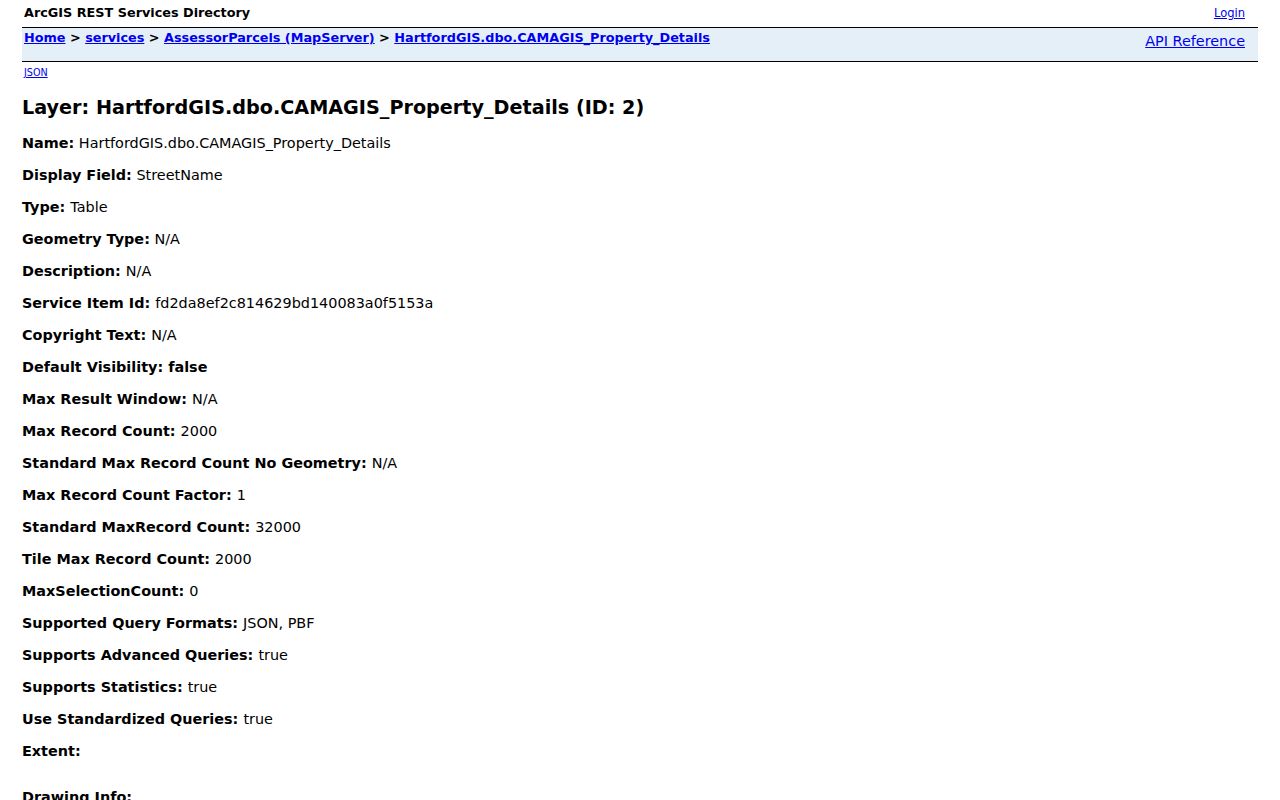
Every value field carries its own label and date, and the source shows why assessment, sale, parcel, and physical facts each need both.
Compare Hartford County Values on One Date Basis
A fair comparison holds the valuation date and the value type steady. Match assessed value to assessed value from the same grand list. Keep market values inside one revaluation frame. Never mix categories. A deed price beside an old assessment proves nothing.
Municipal property cards can bridge those gaps across Hartford County systems. West Hartford cards and sale books may show title, assessment, deed volume and page, sale date, sale price, year built, and area. Hartford CAMA links similar fields through its sale, legal-reference, and physical data. New Britain offers its municipal assessment route through VGSI. Each bridge works only after the municipality and card date are confirmed.
For a recorded sale, read the deed type and sale code, because a non-market transfer compares poorly even when its price is public. For an assessor figure, check the revaluation date; the source date is part of the value, not a footnote.
Know What Hartford County Property Value Cannot Prove
An assessor value is an administrative estimate. It is public and official, tied to a valuation date. It cannot inspect every condition a private appraisal would. It cannot predict the price two parties will strike. A prior sale proves neither present condition nor demand.
The assessed figure does not explain a tax bill alone. Mill rates matter. So do district charges, exemptions, abatements, and the applicable grand list. Read those pieces in the municipal tax and assessment records rather than inferring them from the value ratio.
For purchase or sale diligence, treat the public value as one documented input. A parcel-specific appraisal can weigh condition and market evidence beyond the administrative card. Keep that opinion separate. Keep it distinct from the municipality's official assessment field and from the consideration stated in a recorded deed.
Some portals display one unlabeled total. Never guess whether it is appraised, assessed, or taxable. Use the assessor's field key, property card, or office contact to identify it, because municipal systems differ across Hartford County.
Value vs price. Hartford County assessed value supports municipal taxation. It is not a promise of sale price and is not a parcel-specific private appraisal.